What Pre-Industrial Civilizations Knew About Rest That the Modern Hustle Culture Has Completely Forgotten
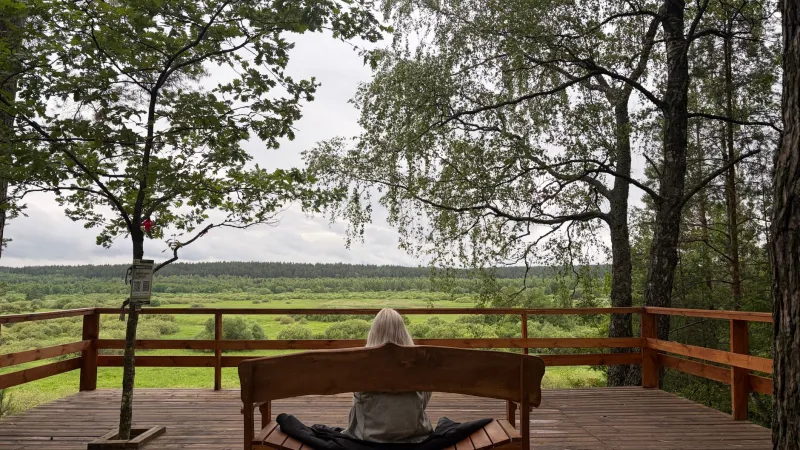
There is a word that has quietly become an insult in contemporary American life: idle. To be idle is to be unproductive, unfocused, perhaps even morally suspect. The phrase "idle hands are the devil's workshop" did not emerge by accident — it reflected a cultural anxiety that has only deepened in the centuries since. Yet for most of human history, the deliberate absence of structured activity was not a failure of character. It was considered, in many traditions, a form of wisdom.
The question worth sitting with — uncomfortably, if necessary — is this: What did ancient cultures understand about unscheduled time that we have so thoroughly dismantled, and what is that dismantling costing us?
The Day Before the Clock
Prior to industrialization, the architecture of a day was not carved by the hour hand. It was shaped by sunlight, by the agricultural calendar, by the rhythms of the body, and by the communal pulse of village life. Ancient Greek philosophers did not distinguish sharply between leisure and intellectual cultivation — the concept of scholē, from which the English word "school" derives, referred not to a place of labor but to a state of unhurried contemplation. Time free from obligation was considered the very precondition for wisdom.
In ancient India, the Vedic concept of kala — sacred time — acknowledged that not all hours were meant for doing. Certain periods of the day were designated for stillness, for inward reflection, for simply being present without an agenda. The Ayurvedic tradition organized daily life around natural biological rhythms, recognizing that the body's readiness to work, to digest, to rest, and to contemplate varied across the day in ways that demanded respect rather than override.
Similarly, indigenous cultures across North America structured communal life around seasonal ceremonies, storytelling circles, and extended periods of what a modern productivity consultant might label "downtime" but what those communities understood as essential maintenance of the human spirit.
None of these civilizations invented the productivity timer. And yet they built philosophies, architectural marvels, oral traditions, and agricultural systems that have outlasted nearly everything the modern efficiency movement has produced.
The Neuroscience of the Wandering Mind
For decades, the scientific community largely dismissed mind-wandering as cognitive noise — a failure of the attentional system to stay on task. That view has shifted dramatically. Research from institutions including Stanford and Harvard has illuminated the function of what neuroscientists call the default mode network (DMN), a constellation of brain regions that activates precisely when we are not focused on a specific external task.
Far from being dormant, the DMN is extraordinarily active during unstructured time. It is during these states that the brain consolidates memories, processes complex emotional experiences, rehearses social scenarios, and engages in the kind of non-linear thinking that underlies creative insight. In a 2019 study published in Psychological Science, researchers found that allowing participants periods of unguided mental rest between problem-solving tasks significantly improved their performance on subsequent creative challenges compared to those who remained continuously engaged.
What this suggests is not merely interesting — it is urgent. When we eliminate boredom from our lives through constant stimulation, we are not optimizing our brains. We are depriving them of the very processing cycles that make us more capable, more emotionally regulated, and more genuinely intelligent.
The Physiology of Always Being "On"
Chronic busyness is not simply a philosophical misalignment. It carries measurable physiological consequences. Sustained cognitive engagement without adequate rest elevates cortisol levels, suppresses immune function, and disrupts the sleep architecture that the brain requires for overnight memory consolidation. The American Psychological Association has documented rising rates of burnout across professional sectors, with younger workers — those most thoroughly socialized into digital-age productivity culture — reporting the steepest declines in psychological wellbeing.
Burnout, it bears noting, is not merely exhaustion. It is a specific syndrome characterized by emotional detachment, a collapse of meaning, and a profound disconnection from the very work that once felt purposeful. In other words, it is what happens when the human organism is treated as a machine that should run continuously at full capacity — a model that no ancient tradition would have recognized as sustainable, let alone admirable.
The body, like the agricultural land those early civilizations depended upon, requires fallow periods. A field that is never left to rest eventually stops producing. The parallel is not poetic license. It is biological fact.
Boredom as a Spiritual Technology
Many contemplative traditions positioned the experience of boredom not as a problem to be solved but as a threshold to be crossed. In Zen Buddhism, the practice of shikantaza — "just sitting" — deliberately removes the meditator from any goal, any technique, any object of concentration. The discomfort that arises in the absence of stimulation is itself the teaching. Sitting with that discomfort, rather than fleeing it, was understood to cultivate a quality of presence that no amount of structured activity could produce.
Christian monastic traditions similarly built long hours of silence into the daily schedule — not as punishment, but as the condition under which genuine inner transformation became possible. The Desert Fathers of early Christianity, living in the Egyptian wilderness, described acedia — a restless inability to remain still — as one of the most dangerous spiritual afflictions a person could suffer. They would recognize it immediately in the contemporary American who cannot sit through a meal without checking a screen.
What these traditions shared was an understanding that the human mind, left unoccupied, does not become empty. It becomes generative in ways that purposeful striving cannot replicate.
Reclaiming Restorative Boredom: A Practical Reorientation
Recovering the benefits of unstructured time does not require a monastery or a sabbatical. It requires, more modestly, a deliberate redesign of daily expectations.
Begin with margins. Ancient time was inherently marginal — there were gaps between tasks, between seasons, between conversations. Introduce intentional gaps into your schedule: ten minutes between meetings with no phone, a walk without earbuds, a meal eaten without a screen. These are not luxuries. They are the neurological equivalent of crop rotation.
Resist the urge to fill silence with content. The instinct to reach for a podcast, a scroll, or a playlist the moment stillness arrives is itself diagnostic. Notice it. Sit with the discomfort for a few minutes before acting on it. That discomfort is the default mode network asking to be allowed to work.
Adopt a seasonal lens. Ancient cultures did not expect the same output from themselves in January as in June. Consider where in your own annual cycle you are, and whether your productivity expectations honor that rhythm or violate it.
Treat boredom as information. When boredom arises, rather than treating it as a problem, ask what it is pointing toward. Boredom frequently signals that the mind is ready to engage with something deeper than the task currently in front of it.
The Civilization That Rested
It is worth returning to the observation that began this inquiry. The societies that built the Parthenon, composed the Upanishads, developed the principles of Islamic geometry, and cultivated the oral traditions that carried entire cosmologies across generations — none of them optimized their days in the way contemporary culture demands. They rested. They wandered. They sat together without agenda. They allowed the mind to drift and return.
That is not a romanticization of the past. It is a recognition that the human nervous system has not changed meaningfully in the centuries since those civilizations flourished. What has changed is the cultural permission to honor what that nervous system actually needs.
Burnout is not a personal failure. It is the predictable outcome of applying an industrial model to a biological reality. And the remedy, as ancient wisdom and modern neuroscience now agree, begins with something radical in its simplicity: doing nothing, and allowing that nothing to be enough.