Building Cathedrals in the Mind: How Roman Memory Masters Can Free You From Digital Overload
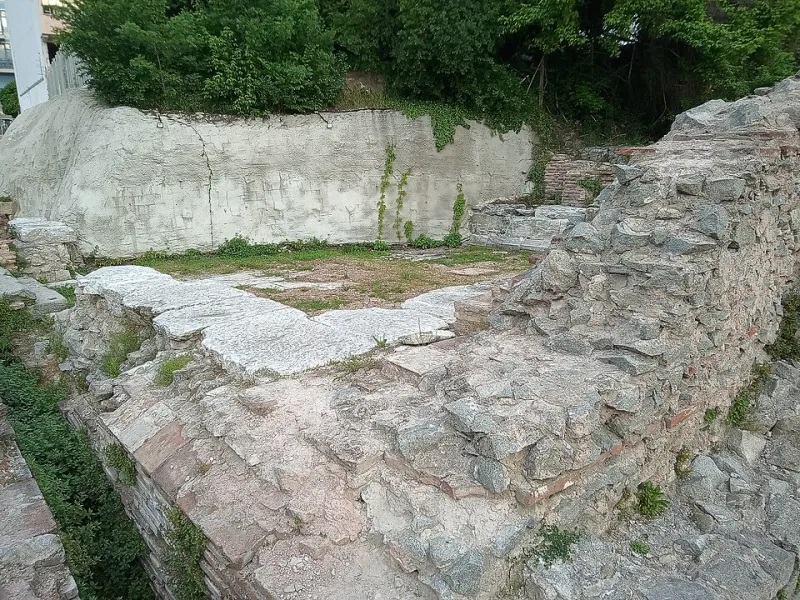
Photo: Gitanes232, CC BY-SA 4.0, via Wikimedia Commons
Somewhere between your third browser tab and your second productivity app of the morning, something quietly slips away. Not a file. Not a password. Something more essential — the felt sense that you actually know things, that knowledge lives inside you rather than floating perpetually out of reach in the cloud.
This is the paradox of the information age. We have never had access to more data, and we have rarely felt more cognitively overwhelmed. Americans check their phones an average of 144 times per day, according to recent surveys, yet studies consistently show that digital note-taking and passive scrolling produce shallower retention than handwriting or active recall. We are, in a very real sense, outsourcing our minds — and paying a steep neurological price.
The ancient Romans had a different arrangement with knowledge. And it turns out, their solution was architectural.
The Art of Memory, Recovered
The Method of Loci — from the Latin word for places — is a mnemonic technique with roots stretching back to fifth-century Greece, later refined and celebrated by Roman intellectuals including Cicero and Quintilian. The system asks practitioners to mentally construct a familiar space: a childhood home, a well-traveled street, the interior of a favorite building. Within that imagined architecture, vivid, often bizarre mental images are placed at specific locations, each image encoding a piece of information to be remembered.
To recall the information, the practitioner simply takes a mental walk through the space, encountering each image in sequence. The knowledge does not sit in a list or a file. It inhabits a place.
Cicero described this practice in De Oratore as the foundation of a trained orator's ability to deliver lengthy speeches without notes. Seneca used similar techniques to command vast philosophical and rhetorical knowledge. Medieval scholars later called it the ars memorativa — the art of memory — and considered it among the highest intellectual disciplines a person could cultivate.
For centuries, it was considered not a trick but a form of wisdom: the deliberate architecture of the self.
What Neuroscience Has Discovered
Modern brain imaging has given us a remarkable view into why this ancient practice works so effectively.
The hippocampus, the brain's primary memory consolidation center, evolved in large part to process spatial information. Humans are, at a biological level, navigational creatures. Our ancestors needed to remember where water sources were located, which paths led to danger, and which landmarks marked safe shelter. The brain encodes spatial memory with unusual depth and durability — which is precisely why you can still navigate your childhood neighborhood decades later, even if you struggle to remember what you read last Tuesday.
The Method of Loci exploits this neurological architecture deliberately. By anchoring abstract information to imagined spatial locations, practitioners are essentially routing new knowledge through one of the brain's most ancient and reliable filing systems.
A landmark 2017 study published in Neuron demonstrated that participants trained in the Method of Loci for just six weeks showed significantly improved memory performance compared to control groups — and brain scans revealed that their neural connectivity patterns began to resemble those of professional memory champions. The technique does not merely help you remember more. It appears to structurally reshape how the brain organizes information.
Additional research from the University of Toronto has shown that the rich, emotionally vivid imagery central to the method activates the amygdala alongside the hippocampus, creating what neuroscientists call "dual encoding" — the same information stored through multiple neural pathways simultaneously, making retrieval far more robust.
Why Your Notes App Cannot Compete
The digital productivity industry has produced extraordinary tools: searchable databases, synchronized cloud storage, AI-assisted organization. And yet, for the purpose of genuine learning — of integrating knowledge so that it becomes part of how you think, not merely something you can look up — these tools carry a fundamental limitation.
Psychologists call it the "Google Effect" or digital amnesia: the documented tendency for people to remember less information when they know it is externally stored and retrievable. When the brain perceives that it does not need to retain something, it invests less in encoding it. The result is a kind of cognitive outsourcing that feels efficient but quietly erodes the depth of understanding.
The Method of Loci demands the opposite. It requires active construction, creative visualization, and repeated mental navigation. That effort is not a bug — it is the mechanism. The friction of building a memory palace is what makes the knowledge stick.
Constructing Your First Memory Palace
The practice is more accessible than its ancient pedigree might suggest. Below is a practical framework for beginners.
Choose a familiar location. Begin with a space you know intimately — your current apartment, your parents' home, a route you walk regularly. The more vividly you can reconstruct it in your mind, the more effective it will be as a memory structure.
Establish a fixed path. Decide on a consistent route through the space: perhaps front door, hallway, living room, kitchen, bedroom. This sequence becomes the backbone of your recall system.
Create vivid, unusual images. For each piece of information you wish to remember, construct a striking mental image and place it at a specific location along your path. The stranger and more sensory the image, the better. The brain prioritizes novelty. A giant talking avocado sitting on your couch is far more memorable than a plain label reading "healthy fats."
Navigate regularly. Mental rehearsal is essential. Walk through your palace daily at first, revisiting each image in sequence. Over time, the path becomes automatic and the information deeply encoded.
Expand gradually. As your comfort grows, add rooms, build new palaces for new subjects, or extend existing structures. Advanced practitioners maintain dozens of distinct memory palaces for different domains of knowledge.
Ancient Wisdom as a Modern Practice
There is something quietly profound about the fact that one of the most effective cognitive tools available to us was developed not by a Silicon Valley startup but by scholars walking the marble streets of ancient Rome. Cicero was not trying to optimize his workflow. He was cultivating a relationship with knowledge — treating what he knew as something to be inhabited, not merely accessed.
In the Vedic traditions that inspire much of Gyan Mantras' own perspective, the concept of dharana — concentrated mental focus — describes a similar idea: that genuine knowledge is not passive reception but active integration. The mind, in both ancient Roman and Eastern frameworks, is not a storage device. It is a living architecture, and we are its architects.
In an era when digital distraction has become the default, reclaiming that architecture may be among the most meaningful acts of personal sovereignty available to us. The memory palace does not ask you to abandon technology. It asks you to remember that your mind was always the most sophisticated instrument in the room.
