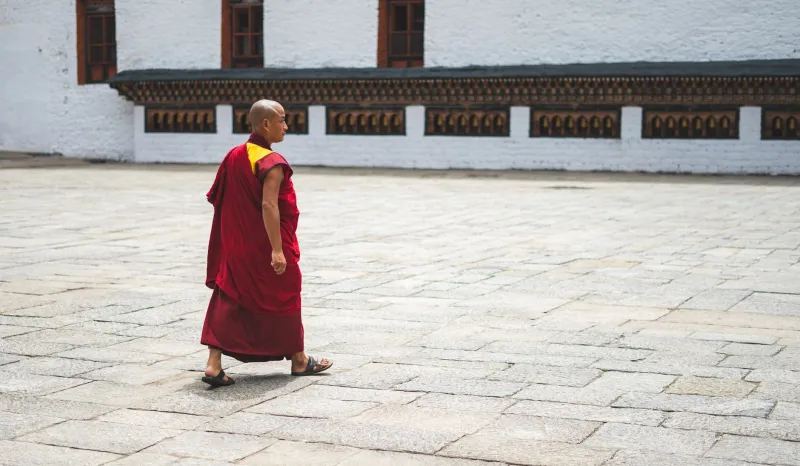
The Art of Waiting: How Ancient Cultures Transformed Patience Into Power — and What Brain Science Now Confirms

There is a particular discomfort that arrives in the space between wanting something and receiving it. In contemporary American life — where two-day shipping feels slow, streaming libraries load in seconds, and social media delivers dopamine on demand — that discomfort has become nearly intolerable. Yet for most of human history, waiting was not a problem to be engineered away. It was a practice to be mastered.
Across vastly different civilizations, ancient thinkers arrived at a remarkably similar conclusion: the person who could endure the interval between desire and fulfillment was, in some essential way, more fully human than the one who could not. Now, centuries later, neuroscience is catching up — and the findings are striking enough to reframe how we think about time, temperament, and the architecture of a meaningful life.
Patience as Spiritual Discipline, Not Passive Waiting
The word "patience" carries unfortunate baggage in modern usage. It tends to conjure images of resigned waiting rooms and gritted teeth. Ancient traditions understood it as something far more dynamic.
In classical Stoic philosophy, the Roman emperor Marcus Aurelius wrote extensively about hypomone — a Greek term often translated as patient endurance but more precisely meaning the active capacity to remain steady under pressure. For the Stoics, waiting was not idleness; it was the arena in which character was forged. The interval between impulse and action was precisely where wisdom lived.
Taoism, the ancient Chinese philosophical tradition, offered the concept of wu wei — effortless action aligned with natural timing. The Taoist sage did not force outcomes before their season arrived. The Tao Te Ching famously observes that muddy water, left still, gradually becomes clear. The image is deliberate: clarity is not achieved by agitation but by the willingness to allow time to do its work.
In the Hindu tradition, the Bhagavad Gita repeatedly counsels titiksha — the capacity to bear discomfort without complaint or reactivity. This was considered one of the foundational virtues of a spiritually mature person, not because suffering was desirable, but because the ability to sit within difficulty without being consumed by it was understood as the gateway to deeper perception.
Native American traditions across tribes observed natural cycles — the patience of seeds, the unhurried turning of seasons — as templates for human conduct. Elders were revered not merely for their years but for the quality of endurance those years had cultivated.
What unites these traditions is a shared insight: waiting, practiced consciously, is transformative. It changes the one who waits.
What Brain Imaging Is Now Revealing
For decades, psychology studied patience primarily through behavioral economics — the famous Stanford marshmallow experiments of the 1970s suggested that children who could delay gratification achieved better life outcomes across multiple domains. But the underlying neuroscience remained opaque. Why, mechanically, does patience matter so much?
Recent neuroimaging research is beginning to answer that question with precision. Studies using functional MRI have demonstrated that the practice of tolerating delay — choosing to wait when the impulse is to act immediately — activates and gradually strengthens connectivity between the prefrontal cortex and the limbic system. In plain terms, the brain region responsible for long-range planning and rational judgment learns to communicate more effectively with the emotional centers that generate urgency and craving.
This is not a metaphor. The neural pathways involved in patient decision-making are measurably different in individuals who regularly practice delay of gratification compared to those who do not. Researchers at the University of Pennsylvania and other institutions have found that these prefrontal-limbic connections correlate with lower rates of anxiety, better relationship stability, and greater financial resilience — outcomes that mirror what ancient traditions attributed to the cultivation of patience.
Additionally, neuroscientists studying the default mode network — the brain's internal processing system, most active during rest and reflection — have found that tolerating uncomfortable pauses, rather than immediately filling them with stimulation, allows for deeper integrative thinking. Ancient contemplative traditions built waiting into their practices precisely because they intuited this: the monk who sat in silence, the elder who paused before speaking, the pilgrim who walked slowly — all were, in modern terms, allowing their neural networks to consolidate and deepen.
The Impatience Economy and Its Hidden Costs
Understanding the neuroscience makes the costs of contemporary American life more legible. The United States has built an economy that systematically erodes the patience circuits. Notification architecture on smartphones is designed to interrupt at irregular intervals — a pattern that behavioral researchers recognize as a powerful conditioning mechanism, one that trains the nervous system to expect and demand immediacy.
The consequences extend well beyond personal irritability. Research published in journals including Psychological Science has linked lower capacity for delay of gratification to poorer physical health outcomes, higher rates of impulsive financial decision-making, and diminished relationship satisfaction. A culture that cannot wait is, in a precise neurological sense, a culture that is gradually weakening its capacity for wisdom.
This is not a moral judgment. It is a structural observation. The ancient teachers who designed patience practices into their traditions were not being ascetic for its own sake. They were building systems to protect a cognitive and emotional capacity they understood to be foundational.
Reclaiming the Practice: Ancient Strategies for a Modern Context
The encouraging finding from both contemplative traditions and contemporary neuroscience is that patience is trainable. The brain remains plastic throughout adulthood, and the circuits governing patient endurance respond to deliberate practice.
Structured delay as daily discipline. Several ancient traditions built small, deliberate delays into ordinary life — pausing before eating, waiting before responding to a provocation, sitting in silence before beginning the day's work. These micro-practices are now recognized by behavioral researchers as effective training for the prefrontal-limbic pathways. Even a consistent ten-second pause before reacting to a frustrating email begins to shift neural patterns over time.
Reframing the interval. Taoist and Stoic frameworks both taught practitioners to regard the waiting period not as dead time but as the actual site of development. Journaling during periods of uncertainty, or simply naming the discomfort of waiting without immediately resolving it, builds the tolerance that eventually becomes resilience.
Embodied patience through breath. Pranayama, the ancient Indian practice of regulated breathing, specifically extends the exhale — a technique that activates the parasympathetic nervous system and physiologically reduces the urgency of impatient impulses. Modern clinicians working in stress reduction have independently arrived at similar protocols, confirming what practitioners in the Vedic tradition encoded thousands of years ago.
Seasonal and cyclical thinking. Indigenous and Eastern traditions alike oriented daily life around natural cycles rather than arbitrary deadlines. Deliberately engaging with slower rhythms — gardening, cooking from scratch, walking rather than driving — reintroduces the body and mind to timescales that counteract the acceleration of digital culture.
Patience as a Rare Competitive Advantage
There is something quietly radical about the idea that in an age of relentless acceleration, the willingness to wait has become a form of power. Investors who can hold positions through market turbulence outperform those who react to every fluctuation. Therapists who sit with a client's silence rather than rushing to fill it create deeper healing relationships. Leaders who pause before making consequential decisions earn the trust that reactive leaders erode.
The ancient traditions were not naive about ambition or achievement. They simply understood that the person who had mastered the interval between impulse and action operated from a different level of capability than one who had not. What they called virtue, modern neuroscience calls prefrontal regulation. The mechanism differs; the insight is identical.
In a world that profits from your impatience, learning to wait — deliberately, skillfully, and with the understanding that the interval itself is generative — may be among the most subversive and sustaining practices available to the contemporary seeker. The ancients knew this. The scanners now confirm it. The practice remains, as it always has, yours to begin.